Home
Home
How to Get My Dog to Drink Water? To get your dog to drink water, ensure fresh water is always available, use a clean bowl, and try adding flavor to entice them.
Keeping your dog hydrated is crucial for their overall health.
Importance of Hydration
Proper hydration is essential for a dog’s health, aiding in digestion, nutrient absorption, and temperature regulation.
Dogs need adequate water intake to maintain healthy bodily functions.
Signs of Dehydration
- Lethargy: Lethargy refers to a state of tiredness or lack of energy. In dogs, lethargy can manifest as excessive sleepiness, reluctance to move or exercise, and overall decreased activity levels. It’s essential to pay attention to changes in your dog’s energy levels, as lethargy can be a sign of various underlying health issues.
- Dry Gums: Dry gums in dogs may indicate dehydration or other health concerns. Normally, a dog’s gums should be moist and pink. Dry gums can appear pale, sticky, or tacky to the touch. Dehydration can be a serious issue and may require immediate veterinary attention.
- Loss of Skin Elasticity: Skin elasticity refers to the ability of the skin to return to its original shape after being gently pinched or pulled. In dogs, loss of skin elasticity can be a sign of dehydration. When a dog is dehydrated, the skin may not spring back as quickly or may remain tented when pinched, indicating a lack of hydration.
- Sunken Eyes: Sunken eyes occur when the eyeballs appear to recede into the sockets, giving the appearance of hollow or sunken eyes. In dogs, sunken eyes can be a sign of dehydration, weight loss, or other health issues. It’s essential to monitor your dog’s eye health and seek veterinary advice if you notice any changes in eye appearance.
- Panting: Panting is a normal behavior for dogs, especially after exercise or when they’re trying to cool down. However, excessive or prolonged panting can indicate underlying health issues such as pain, anxiety, heatstroke, or respiratory problems. If your dog is panting excessively and it’s not related to activity or temperature, it’s important to consult a veterinarian to determine the cause.
If you notice any of these signs, it’s important to encourage your dog to drink water and seek veterinary advice if necessary.
For more information on dog health and pet care, check out our related articles How Long Can a Dog Go Without Water?
Learn more about dehydration in dogs.
Tips to Encourage Your Dog to Drink Water

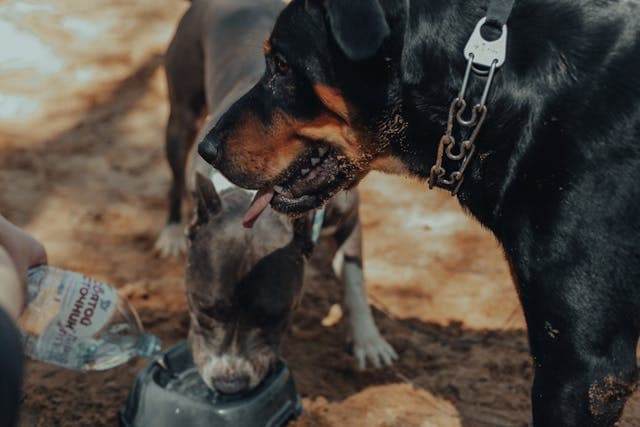
Ensure your dog has access to fresh and clean water by regularly refreshing their water bowl and cleaning it to prevent bacterial growth.
Choose a water bowl that suits your dog’s preferences in terms of size and shape, and consider adding flavor enhancers like low-sodium broth or ice cubes to make drinking more appealing.
Provide multiple water stations throughout your home for convenience, and consider using a pet fountain if your dog enjoys running water to encourage hydration.
Additionally, explore our resources for further advice on dog nutrition and diet.
Find out more about pet fountains.
Monitor Water Intake
Keep track of your dog’s water intake to ensure they are drinking enough.
On average, a dog needs about one ounce of water per pound of body weight daily.
If your dog continues to refuse water or shows signs of dehydration, consult your veterinarian.
There could be an underlying health issue that needs to be addressed.
Conclusion
Ensuring your dog drinks enough water is vital for their health.
By keeping water fresh, using the right bowl, adding flavors, and monitoring intake, you can help keep your dog hydrated and healthy.